Mountain Pine Beetle in the City: Protecting Denver’s Urban Pines
When you hear “Mountain Pine Beetle,” images of high-altitude forests often come to mind. But the reality is, these destructive insects are a significant threat right here in Denver’s urban and suburban landscapes. Our city is home to numerous Ponderosa, Scotch, and other susceptible pine trees that line our streets, fill our parks, and enhance our backyards. As your local arborists, we’re here to help Denver residents understand this threat and protect their valuable urban pines.
Denver’s Pines: An Unexpected Target
While large-scale outbreaks often start in natural forests, our urban trees are far from immune. In fact, isolated outbreaks and individual tree losses due to Mountain Pine Beetle (MPB) are a consistent concern in Denver for several reasons:
-
Valuable Trees: Urban trees are often older, larger, and represent a significant investment in property value and shade. Losing one can be devastating.
-
Stress Factors: Denver’s climate, compacted soils, root damage from construction, and inadequate watering can all stress urban trees, making them more vulnerable to MPB attacks.
-
Proximity: Infested trees in nearby natural areas or even a neighbor’s yard can serve as a source for new beetle generations to spread.
Recognizing the Signs in Your Yard:
Spotting an MPB infestation early in an urban setting is critical because you often have fewer trees, making each one more precious. Look for these key indicators:
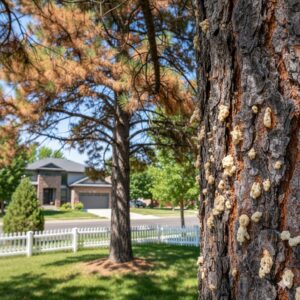
- Pitch Tubes: Small, popcorn-like blobs of sap (often mixed with reddish-brown boring dust) on the trunk. This is the tree’s attempt to expel the beetle.
- Boring Dust: Fine, reddish-brown sawdust caught in bark crevices or at the base of the tree indicates active tunneling.
- Discolored Needles: While a late sign, the needles will turn dull green, then yellow, and eventually a distinct reddish-brown, usually several months after a successful attack.
- Woodpecker Activity: Increased woodpecker feeding can sometimes indicate beetles under the bark.
The Denver Homeowner’s Best Defense: Prevention!
Once a pine tree in your yard has been successfully attacked by a large number of Mountain Pine Beetles, it cannot be saved. The focus for Denver homeowners must be on prevention:
- Prioritize Tree Health:
-
-
-
Water Wisely: Even mature pines in Denver benefit from deep, consistent watering, especially during dry spells. Ensure the soil is moist to a depth of 12-18 inches.
-
Mulch: A 2-4 inch layer of organic mulch around the base of the tree helps retain moisture and regulate soil temperature.
-
Avoid Damage: Be careful with lawnmowers, string trimmers, and construction activity that can wound the bark, creating entry points for pests and diseases.
-
-
- Protective Bark Sprays (The Most Effective Preventative):
-
-
-
For high-value pine trees that are healthy but at risk, a preventative bark application is the most reliable defense.
-
These treatments involve applying a specialized insecticide to the trunk and main branches. When beetles bore through the treated bark, they are killed.
-
Timing is Everything: These sprays must be applied before the beetles attack, typically in late spring or early summer in Denver, and often need to be reapplied annually.
-
Professional Application: This is not a DIY job. Our certified arborists have the training, equipment, and permits to apply these treatments safely and effectively, ensuring maximum coverage and protection.
-
-
- Inspect Regularly: Make it a habit to walk around your pine trees every few weeks, looking for any of the signs mentioned above. Early detection can help protect nearby trees if an infestation is caught.
- Remove Infested Trees Promptly: If a tree is confirmed to be infested, its removal is crucial to prevent the beetles from emerging and spreading to healthy trees. This should ideally be done before the next generation of beetles emerges in summer.
Partnering with Your Denver Arborist:
Protecting your urban pines from Mountain Pine Beetle is an investment in your property and the beauty of our city. Our team is intimately familiar with Denver’s tree challenges and offers:
-
Expert Risk Assessment: We can help identify which of your pine trees are most susceptible.
-
Targeted Preventative Treatments: Safe and effective bark spray applications.
-
Professional Infestation Management: Safe removal and disposal of infested trees.
-
Comprehensive Tree Care Advice: Guidance on long-term tree health for all your landscape trees.
Don’t wait for your valuable pine tree to show the reddish-brown needles – by then, it’s too late. Be proactive and partner with us to ensure your Denver pines remain strong, healthy, and beautiful for years to come. For more information, please visit our page about our plant healthcare services and the Mountain Pine Beetle.
Contact Donovan Arborists today at (303) 623-8733 (TREE) or use our FREE ESTIMATE form – We look forward to hearing from you!


